GRS Service HVAC Inc.
CSLB C-20 #1154007
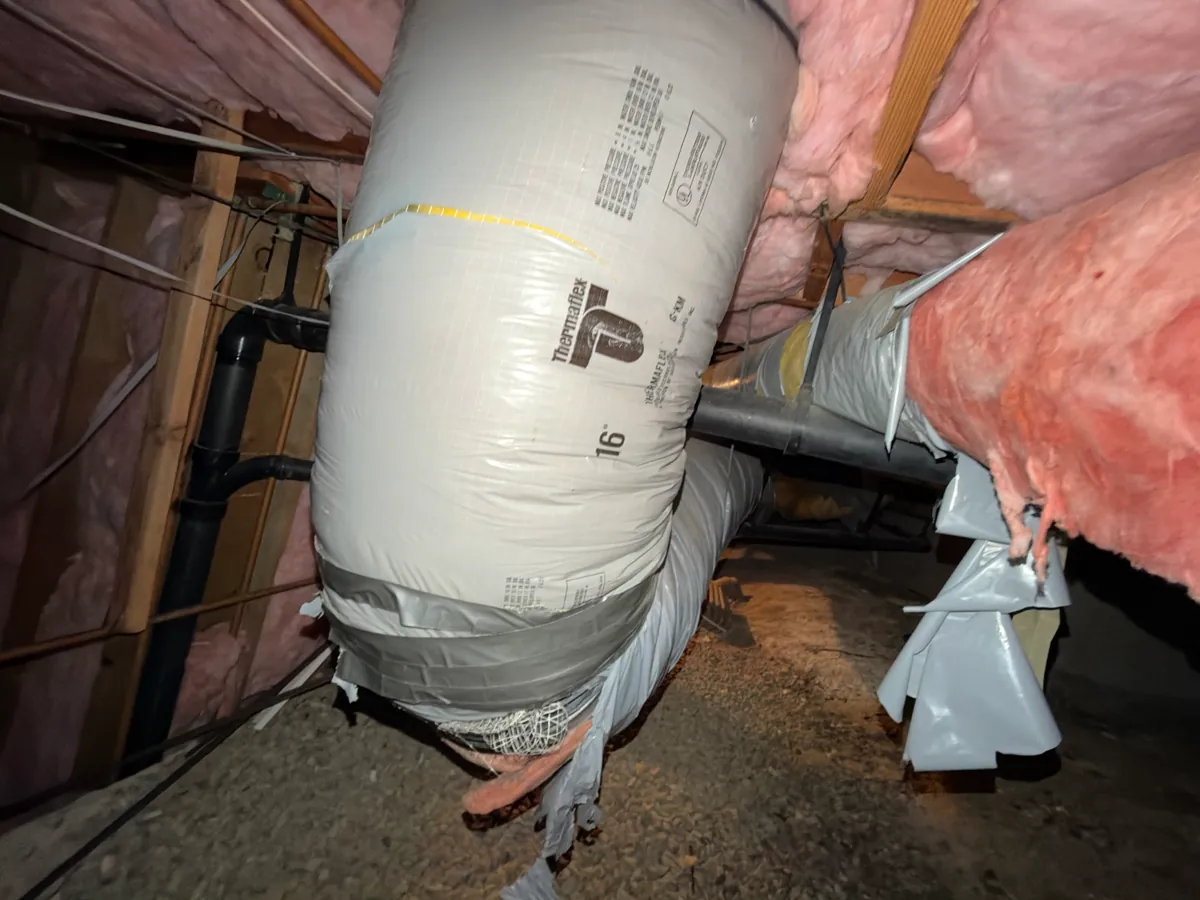
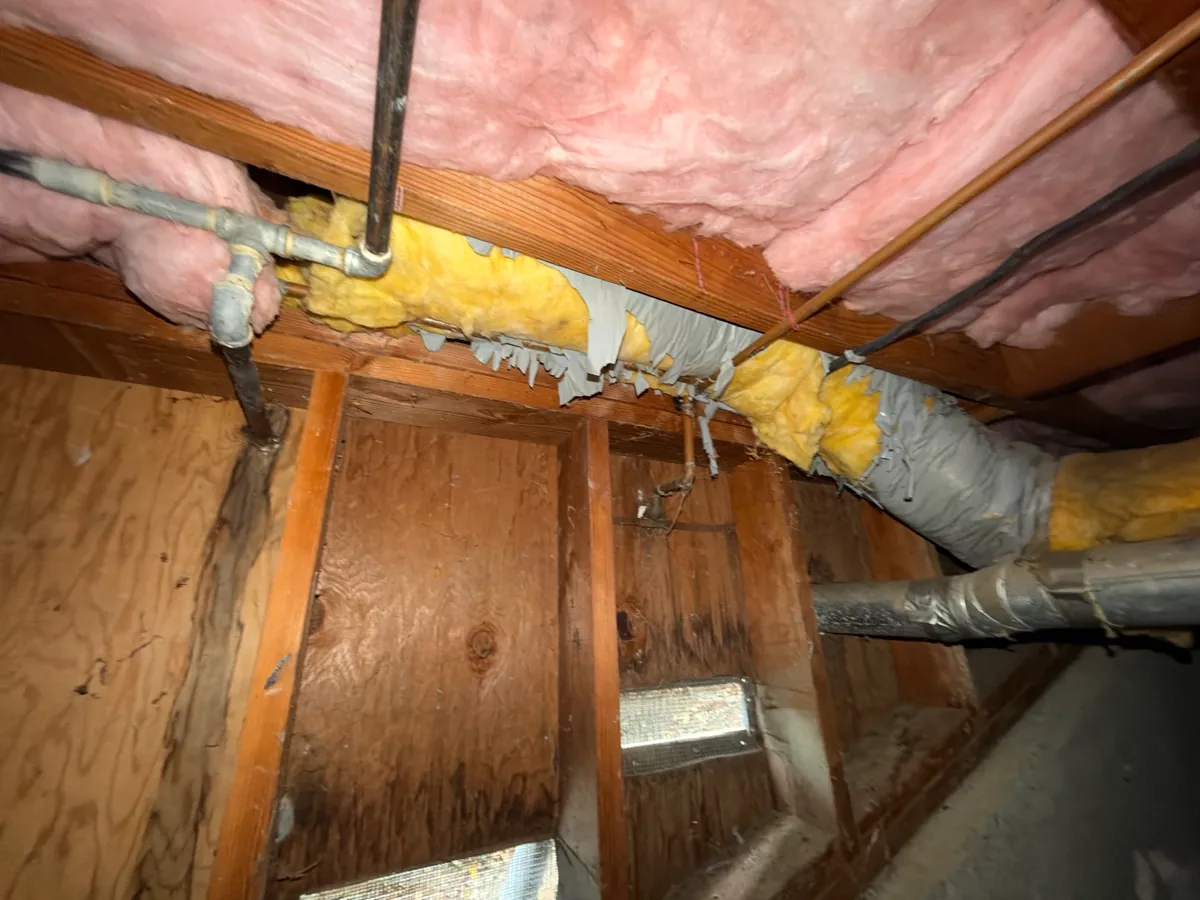
What damaged ducts look like
Ducts carry the air your system heats or cools to each room. When they run under the house, you may never see them. These are the signs to look for.
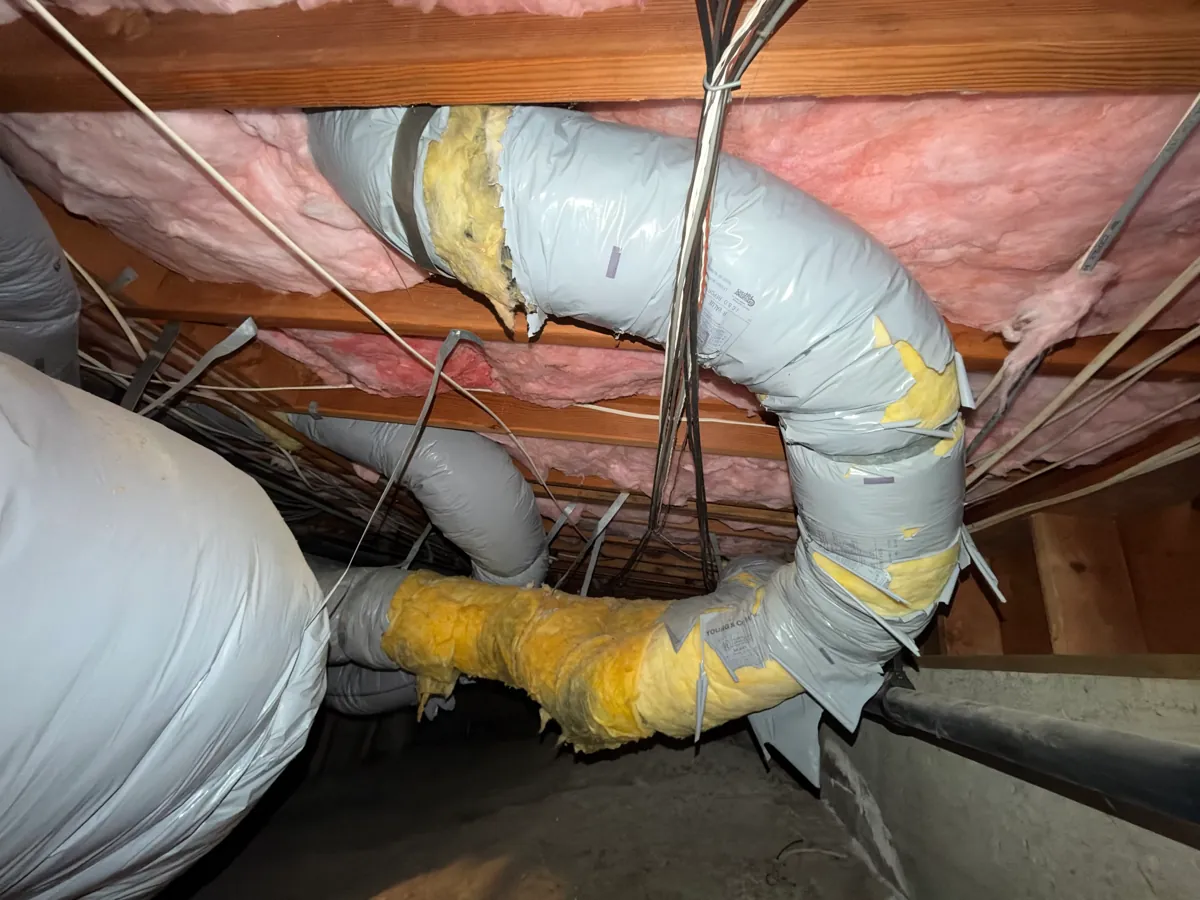
- A torn outer jacket. The gray or silver layer protects the insulation underneath.
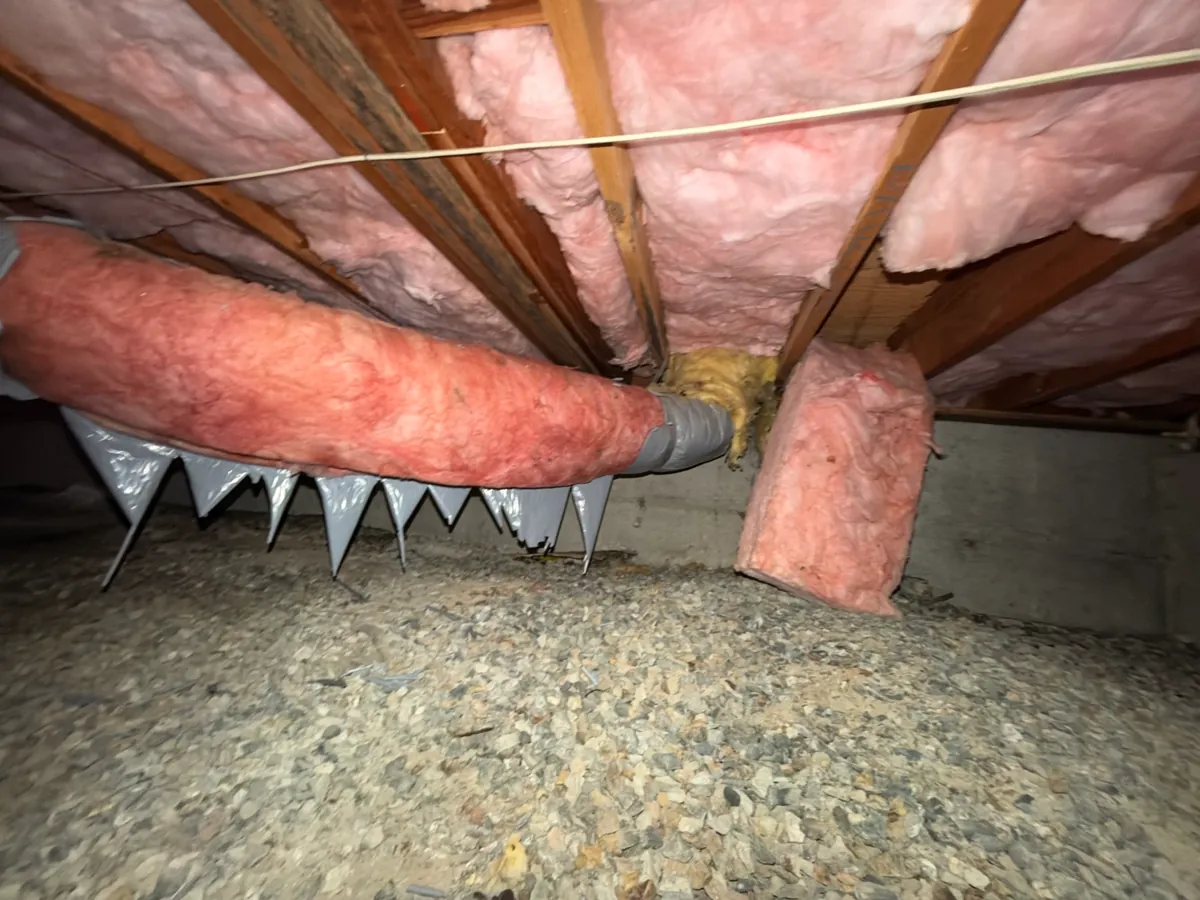
- Exposed insulation. Yellow or pink insulation showing through means the jacket is no longer doing its job.
- Loose tape and hanging strips. Tape that has let go often marks an old repair or a joint worth checking.
Why it matters
A crawl space is not heated or cooled. Insulation helps the air in the duct hold its temperature on the way to your rooms. Rooms that never feel right and weak airflow at some registers are common reasons to have the ducts looked at.
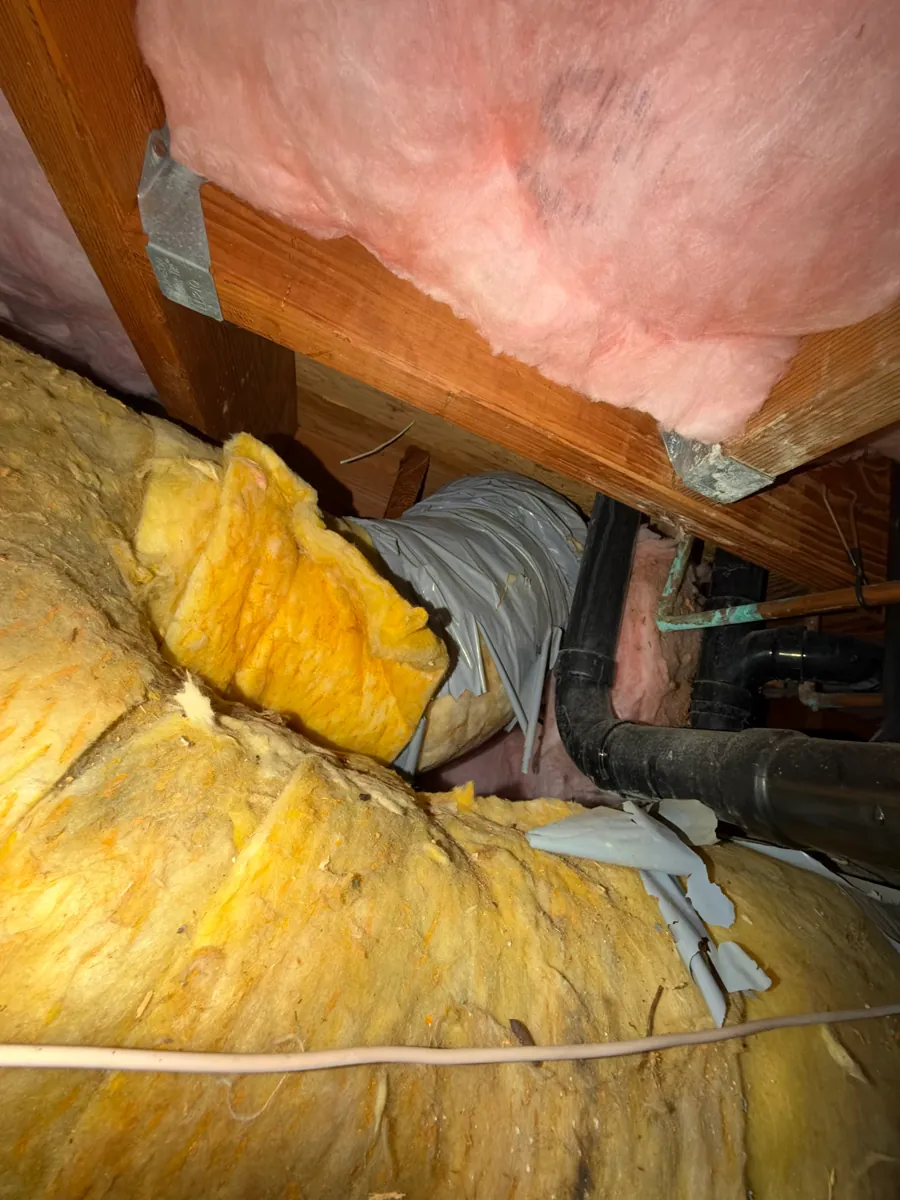
A torn jacket does not prove a duct leaks. Only a leakage test shows that. If someone quotes you new ducts from a photo alone, ask for the test result.
What it takes to fix
- Repair and sealing. Reconnect loose runs, replace crushed sections and seal joints with duct tapes and mastics rated to UL 181, the materials the California Energy Code calls for.
- Full replacement. Take out the old ducts, install a new insulated system and test it for leaks.
What California requires
The 2025 California Energy Code applies to permits applied for on or after January 1, 2026. When more than 25 feet of new or replacement ducts are installed in a single-family home:
- Ducts in an attic or other unconditioned space need at least R-8 insulation in our area (Climate Zones 11 and 12).
- The whole duct system has to pass a leakage test checked by an independent ECC-Rater (formerly called a HERS Rater).